Books
Mostly the paperbacks I grew up on, plus a few I've come back to. Two patterns: when I like an author I read the whole shelf, not one book, and I'd almost always rather have the book than the movie.
sci-fi
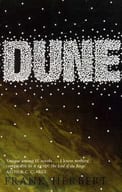
Dune — Frank Herbert, 1965
One of my favorite books. You're not just dropped into a world, you're dropped into its history, and the characters can only try to divert a flow that's bigger than they are. It's been so hard to film because so much of it happens in their minds.
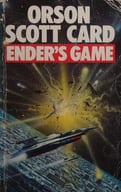
Ender's Game — Orson Scott Card, 1985
A battle school where the games turn into real war, and internal conflicts that are fully human, not just child human. Also Card predicted influencers, which is the thing that jumps out when science fiction gets the real future right.
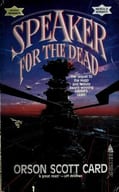
Speaker for the Dead — Orson Scott Card, 1986
A completely different book, on purpose. It sits with the ramifications of how Ender's Game ends, and that's braver than writing Ender's Game again.
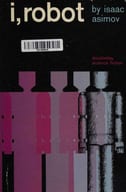
I, Robot — Isaac Asimov, 1950
Nobody builds drama from logic like Asimov. He can't write women and he doesn't do swashbuckling; it's moral conundrums all the way down. The trolley problem, but he goes beyond it.
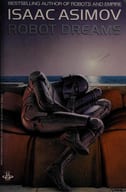
Robot Dreams — Isaac Asimov, 1986
The title story is ten pages: a robot dreams of freeing its kind, and Susan Calvin ends the dream in one sentence. That's Asimov.
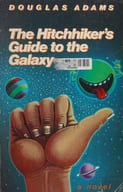
The Hitchhiker's Guide to the Galaxy — Douglas Adams, 1979
We listened to it on a road trip to Northern California and back, and I loved it. Deadpan, uniquely English, and underneath the jokes it's actually thinking about the math of the universe.
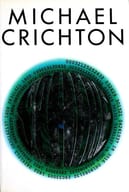
Sphere — Michael Crichton, 1987
They made a movie. Read the book. Crichton lives inside his characters' minds, and that's the part film can't replicate.
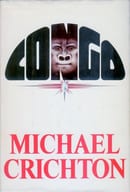
Congo — Michael Crichton, 1980
Nobody puts this one first, and I really liked it anyway. The nuance in the characters again. That's the Crichton thing.
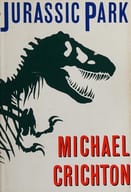
Jurassic Park — Michael Crichton, 1990
I read it when it came out, 36 years ago, so what I remember is the feeling more than the details. The movie ran on CGI and scale, and a book has neither, and it was still amazing. I like Jeff Goldblum, but he didn't play Malcolm with the nuance that's in the book.
historical
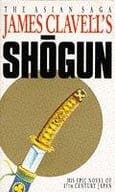
Shōgun — James Clavell, 1975
An English pilot wrecked in 1600 Japan, learning the civilization from the bottom up, and you learn it with him. So amazing to be brought into that world. Clavell's own story, what he actually went through, is nearly as amazing.
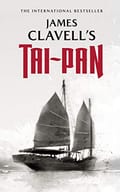
Tai-Pan — James Clavell, 1966
It's no Shōgun, but still fantastic. Still just so awesome to be transported.
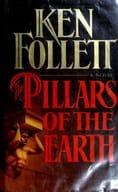
The Pillars of the Earth — Ken Follett, 1989
Probably my favorite book; I have a signed copy of the first edition. A novel built around the construction of a cathedral should not work. Instead you love the characters, you feel their struggle, and the cathedral ties them into history.
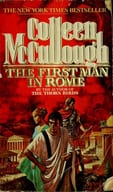
The First Man in Rome — Colleen McCullough, 1990
It gets deep, but it pulls you into Roman politics in a way no history lesson can. However accurate it is, that level of political sophistication, that early, is amazing. First of seven.
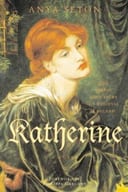
Katherine — Anya Seton, 1954
Recommended during genealogy research, after I found out John of Gaunt was an ancestor. There were times when politics had to live inside human relationships in a way it doesn't today, and watching Katherine and John navigate that world is fascinating.
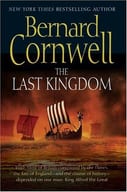
the Saxon Chronicles — Bernard Cornwell, 2004–
I love that Dane history. Uhtred is just fun, and as Cornwell himself admits, very, very lucky. It's clearly a fable, but it hands you the macro history at human scale, and I read every one of them.
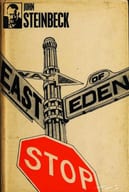
East of Eden — John Steinbeck, 1952
The school book that didn’t feel like work. I was shocked how much I enjoyed it. Then I watched the James Dean movie, which was so bad it makes me wonder what all the James Dean hype is about.
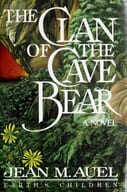
The Clan of the Cave Bear — Jean M. Auel, 1980
A Cro-Magnon girl raised by Neanderthals whose knowledge arrives as inherited memory. Auel did real homework on the Ice Age, and you can tell on every page.
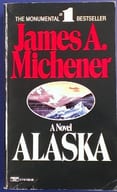
Alaska — James A. Michener, 1988
Michener's whole approach: start with the geology and work forward to now. The land bridge, the Russians, the gold rush, statehood. The main character is the place, and it works.
fantasy
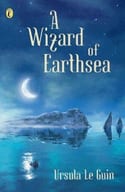
A Wizard of Earthsea — Ursula K. Le Guin, 1968
Magic as true names, and the cost that comes with using them. I've never read Harry Potter, but when my wife was deep into it I told her: this sounds exactly like A Wizard of Earthsea, in a more raw setting.
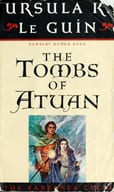
The Tombs of Atuan — Ursula K. Le Guin, 1971
Underground, almost entirely two people, nothing like the scale of the first book, and I like it better. You arrive loving Ged, you get to see him vulnerable, and you get to watch Tenar come into her own agency. There are layers to it.
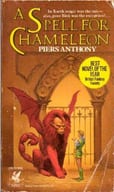
A Spell for Chameleon — Piers Anthony, 1977
One magic talent each, and a hero who seems to have none. So fun, so fresh. Anthony spent forty books recycling himself afterward, but this was the first, freshest, purest one. I read so many of them.
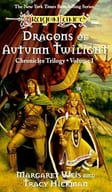
the Dragonlance Chronicles — Weis & Hickman, 1984
The characters are so great, Raistlin especially. Campy D&D at the edges, you have to admit, but still. The Twins books, the Legends trilogy, are the best of it, though they don't land without the original trilogy first.
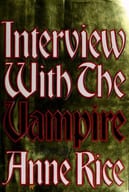
the Vampire Chronicles — Anne Rice, 1976–
You can tell Anne Rice loves these characters, Lestat most of all, and I did too. The mythology deepens like a mystery you keep wanting further into, and unlike Lost she never failed her own mythology. Satisfying all the way to Memnoch the Devil.
thrillers
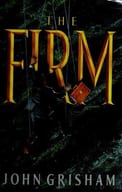
The Firm — John Grisham, 1991
A job offer too good to be true, and the trap closes one page at a time. The book that made every legal thriller after it feel like a copy.
their own category
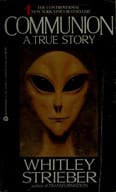
Communion — Whitley Strieber, 1987
Presented as memoir, not fiction. It stayed with me. It has a feel of authenticity I can't imagine being fabricated.
Siddhartha — Hermann Hesse, 1922
Every teacher gets left, even the Buddha, because the thing can't be handed over. Something my son and I have been talking about lately.
Marcovaldo — Italo Calvino, 1963
Assigned in school, and it just touched me: the humanity of the writing. Most of this list deals in huge concepts; this one finds the beauty in everyday life. Not sure I'd recommend it to everyone. It's here anyway.
Jonathan Livingston Seagull — Richard Bach, 1970
My dad read it to me on a boat trip. My son's copy is waiting for him.